
Building resiliency in diagnostic value chains in Africa
Reflections from the GHSC pre-conference workshop co-hosted by the Africa Centres for Disease Control and Prevention (Africa CDC), Clinton Health Access Initiative (CHAI), Health 4 Development (H4D), the Partnership for Supply Chain Management (PFSCM), and VillageReach.
Africa continues to rely heavily on imported health products. According to the Africa Centres for Disease Control and Prevention (Africa CDC), more than 90% of health products used on the continent are imported, including many essential diagnostics. This dependence highlights the urgency of strengthening regional systems and expanding African manufacturing to ensure consistent access to rapid diagnostic tests, molecular reagents, and the consumables needed to operate advanced technologies.
As innovations such as Pathogen Genomic Sequencing (PGS) become increasingly important for surveillance, clinical decision-making, and epidemic response, building resilient and self-reliant diagnostic value chains is essential. These themes were central to a side event at the 2025 Global Health Supply Chain (GHSC) Summit, co-hosted by Africa CDC, CHAI, H4D, PFSCM, and VillageReach.
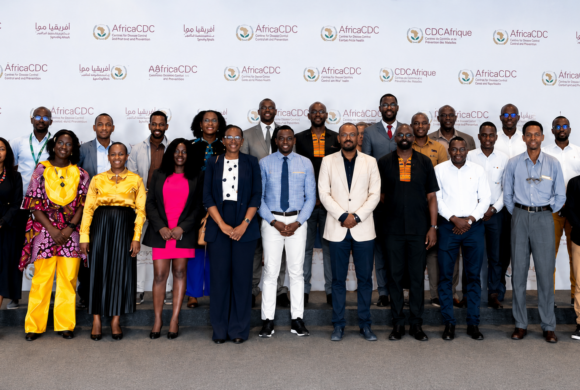
The session, held on 17 November in Kigali, Rwanda, brought together policymakers, funders, manufacturers, technical partners, and country representatives to explore practical pathways to strengthen diagnostic systems across Africa.
Key perspectives
Africa CDC outlined its vision for a more resilient and self-sufficient continent—one with stronger regional manufacturing capacity, harmonized regulatory systems, and better supply chain visibility to respond effectively to public health threats. This framing was complemented by insights from the co-hosting partners, who collectively emphasized the interconnected nature of the diagnostics system, from procurement through to use.

Dr Ajani Olumide Faith
Africa CDC outlined its vision for a more resilient and self-sufficient continent—one with stronger regional manufacturing capacity, harmonized regulatory systems, and better supply chain visibility to respond effectively to public health threats. This framing was complemented by insights from the co-hosting partners, who collectively emphasized the interconnected nature of the diagnostics system, from procurement through to use.
CHAI provided an overview of ongoing work supporting the implementation of identified genomic sequencing procurement and supply chain management solutions and pilot initiatives across multiple countries, in collaboration with partners implementing sequencing across the African continent.
These efforts include streamlining procurement through innovative bundled product designs for core sequencing reagents and consumables; applying comprehensive service and maintenance (S&M) surcharges to proprietary reagents to ensure sequencing equipment is fully covered and operational; enabling sequencing equipment placement supported by embedded equipment and S&M surcharges to operationalize sequencing activities in laboratories seeking to upgrade or acquire new equipment; and implementing all-inclusive procurement models that combine sequencing equipment, S&M, reagents, consumables, and logistics, under clearly defined service level agreements (SLAs) to ensure consistent service delivery, performance monitoring, and strong accountability through accredited manufacturer channel partners.
These approaches underscore the importance of strong collaboration and coordination among laboratories, sequencing consortia, manufacturers, channel partners, and funders to support the successful adoption, implementation, and sustainability of innovative procurement and supply chain management mechanisms.
The delivery of essential laboratory services and surveillance in many countries faces significant supply chain barriers. However, solutions for some of these barriers already exist and innovative procurement and supply chain models are emerging. It will be critical to implement these solutions to bolster health security and resilience at a time when efficiency and self-sufficiency are of growing importance.
— Trevor Peter, CHAI

Dr. Ahmed Ogwell, Dr Ajani Olumide Faith
Discussions also highlighted the importance of efficient and reliable sample and product movement.
VillageReach shared examples of how improved diagnostic network design, integrated sample transport across infectious diseases programs, engagement with local private transporters, and digital tools are reducing sample transport times while ensuring sample quality and data visibility—particularly for samples originating in remote areas. These transport systems form an essential foundation for effective disease surveillance and for ensuring PGS and other advanced diagnostics can be fully leveraged.
PFSCM reinforced the critical role of procurement and supply chain coordination in enabling these systems to function. Drawing on its experience managing complex global and regional supply chains, PFSCM emphasized the need for greater transparency, clearer demand signals, flexible procurement models, and stronger alignment among partners to reduce duplication and improve access to essential diagnostic products.
H4D added perspectives on the growing opportunity to use regional manufacturers to both shorten the supply chain and deliver greater value to diagnostic systems. Their work to develop a centralized database of African diagnostic manufacturers enables countries and procurers to better understand available local capacity and to match it with demand. They underscored that regulatory harmonization and predictable regional demand will be essential to enabling African manufacturers to maintain product quality and scale their offerings.
There is a clear opportunity for local and regional manufacturers to play a larger role in the provision of pharmaceutical products across the continent, with laboratory consumables being a particularly valued entry point. Marrying up demand across markets—public and private healthcare, research, veterinary, and agriculture—makes for a viable offering for both buyers and manufacturers alike.
— René Berger, Health 4 Development (H4D)
Genomic surveillance: growing demand, growing opportunity
Participants highlighted the rapid expansion of PGS across the continent and its growing role in outbreak detection, surveillance, and clinical care. As adoption increases, supply chain systems must adapt to ensure reliable access to reagents, consumables, equipment, maintenance services, and skilled personnel.
Key needs identified during the discussion included:
• Improved demand forecasting and visibility.
• Strengthened procurement and planning capacity.
• Fit-for-purpose service and maintenance arrangements.
• Enhanced sample transport networks and data systems.
Strengthening these foundations will be essential for sustaining PGS and ensuring country readiness for current and future public health priorities.
Trade and transport: enabling cross-border movement of diagnostics and sequencing samples
Speakers emphasized the importance of efficient importation processes—particularly for diagnostics that require cold chain handling, including PGS products. Strengthening coordination between customs authorities, logistics providers, and health institutions will be key to reducing delays and improving reliability.
Efficient movement of diagnostic products requires strong coordination across customs, logistics providers, and health systems. When these pieces align, countries can access the tools they need more affordably and reliably and respond more quickly to public health needs.
— Ishmael Muchemenyi, 4PL Director, PFSCM
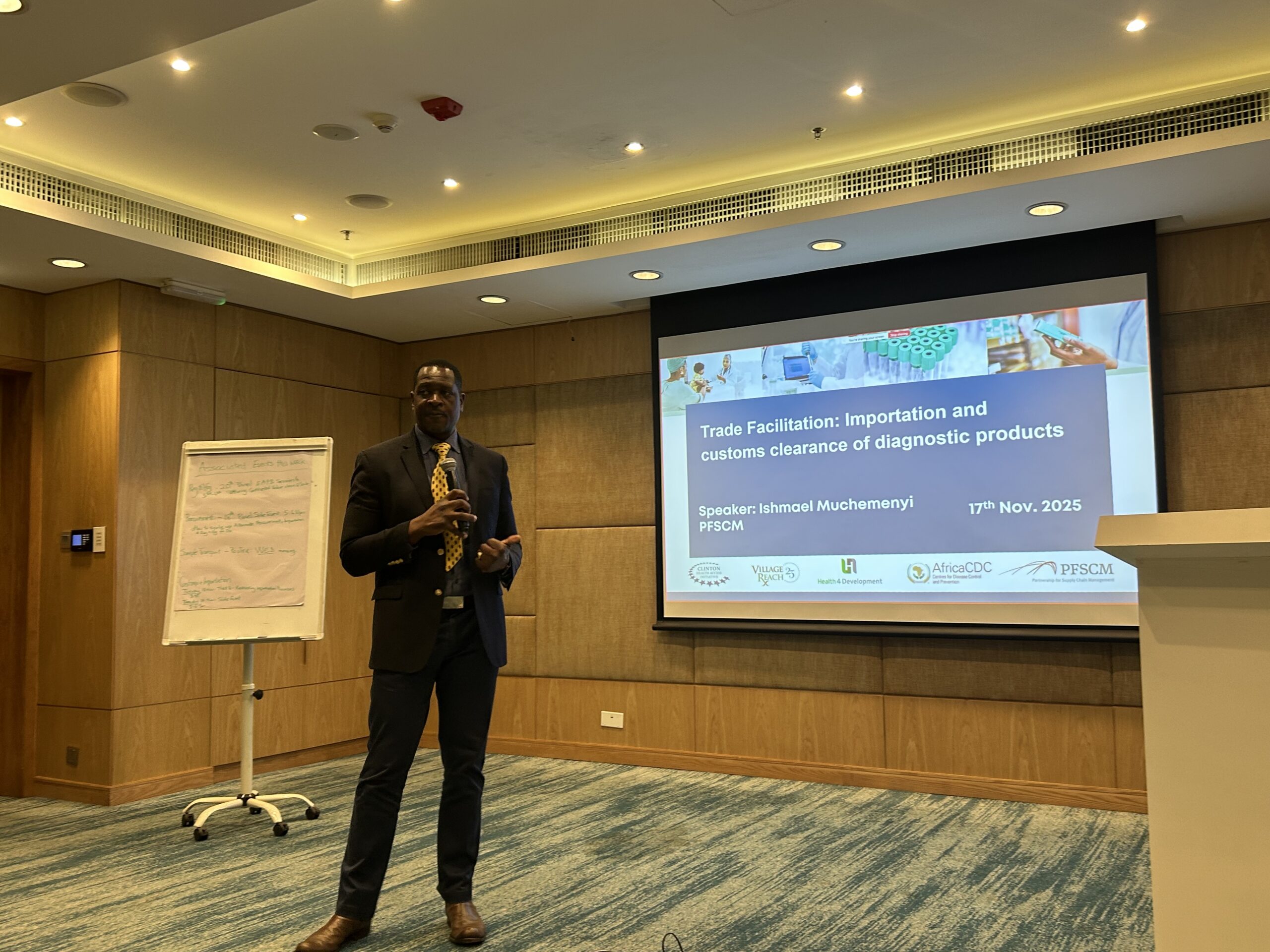
Ishmael Muchemenyi
Lab sample transport systems were also recognized as critical to the effectiveness of diagnostic networks. VillageReach highlighted how integrated sample transport models, system redesign, and stronger data visibility can significantly reduce sample turnaround times, particularly for remote and underserved areas. Their experience demonstrates that coordinated, end-to-end networks of public and private transporters are essential not only for traditional diagnostics but also for enabling the timely and reliable use of advanced technologies such as PGS.
Reliable diagnostics don’t start in the lab—they start with how samples move. When transport systems are integrated and data-driven, we create a foundation for faster results and better care, even in the hardest-to-reach communities.
— Dr. Ahmed Ogwell, CEO, VillageReach
A shared call for alignment and coordinated action
Across all discussions, several shared priorities emerged:
• Decentralized diagnostics that bring testing closer to communities must be reliable and accessible.
• Expansion of PGS should reinforce integrated health systems.
• Partner efforts must be coordinated to maximize impact, including leadership from the private sector.
• Policymakers require clear, timely evidence to inform decision-making.
• Standardization of harmonized system codes and streamlined waiver processes should help reduce ambiguities in PGS reagent importation, where duty-free shipments risk expiry due to long waivers, and commercial importation incurs high taxes that further strain health budgets.
While many solutions already exist, progress depends on strong alignment and the ability to scale successful approaches. Participants highlighted several ongoing processes through which coordination would continue. Africa CDC emphasized the importance of generating strong economic evidence to inform policymakers and noted that its MedFlow platform will continue to serve as a mechanism for convening multi-sectoral stakeholders to streamline processes at the country and regional levels.
Regional Economic Communities were identified as key actors for driving regulatory harmonization to enable regional manufacturing, while participants agreed that sustained engagement from the private sector will be essential for turning shared priorities into actionable solutions. Together, these pathways reflect a shared recognition that long-term progress will rely not only on technical solutions but also on continued dialogue, evidence generation, and alignment across governments, partners, and industry.
CHAI & PFSCM: a joint perspective
CHAI and PFSCM emphasized the opportunity to use advances in sequencing and other diagnostic technologies as catalysts for broader system strengthening. Building resilient supply chains for PGS can reinforce diagnostic access across disease programs and contribute to long-term health security goals.
Both organizations highlighted ongoing work to support countries in strengthening PGS value chains. CHAI has been helping countries strengthen national genomic surveillance systems and procurement and supply chain management strategies, with a focus on translating policy and strategy into practice. This support includes structured partner convening, strengthened collaboration across stakeholders, and enhanced coordination anchored within national public health institutes, helping ensure sequencing scale-up is guided by clear governance and national ownership.
PFSCM has been supporting governments and partners to strengthen the operational foundations of PGS value chains, including improving forecasting accuracy, procurement planning, and supply chain models tailored to the specific requirements of sequencing. Drawing on experience in integrated logistics and multi-supplier coordination, PFSCM has helped improve access to sequencing reagents and consumables and reduce supply disruptions.
CHAI and PFSCM also highlighted joint efforts to support countries in strengthening cross-border movement and importation processes for sequencing products. Through collaboration with national authorities and partners, these efforts focus on identifying bottlenecks, documenting lessons learned, and developing practical guidance to inform technical assistance for countries seeking to streamline importation procedures and strengthen readiness for sequencing scale-up.
Together, these efforts demonstrate that progress is already underway. By combining strategic system design with practical implementation support, CHAI and PFSCM are helping governments build the foundational systems required not only to scale PGS but also to strengthen diagnostic resilience more broadly across health programs.
Both CHAI and PFSCM remain committed to supporting governments, regional institutions, and partners in building robust, sustainable, and increasingly self-reliant diagnostic value chains.
The path forward
Together, we can contribute to a healthier, safer, and more resilient future for Africa.

From left to right:
Dr Mariatou Tala Jallow, Dr. Ahmed Ogwell, Maeve Magner, Dr Ajani Olumide Faith