Ensuring access to malaria diagnostics is not just about procurement. It is about orchestrating a seamless, end-to-end supply chain that connects global suppliers with frontline health workers in remote and geographically challenging regions.
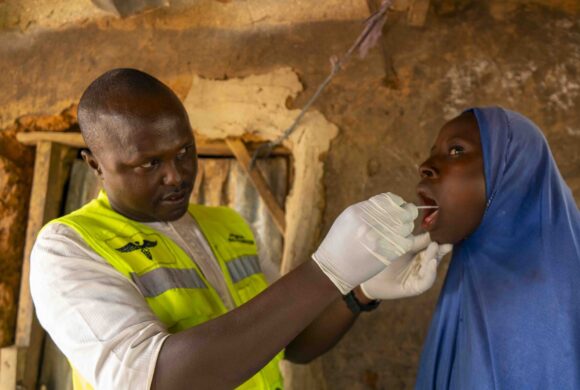
Indonesia continues to face a malaria burden, particularly in remote provinces where timely diagnosis remains a persistent challenge. In this context, each malaria rapid diagnostic test (mRDT) is more than a product—it is a critical tool that enables rapid, accurate diagnosis even in areas without laboratory infrastructure.
Since early 2020, the Partnership for Supply Chain Management (PFSCM) has supported Indonesia’s Ministry of Health (MoH) in strengthening supply chain operations for essential health products. A recent large-scale mRDT shipment illustrates how integrated supply chain management can turn operational complexity into measurable, on-the-ground impact.


Scale
A high-volume, time-sensitive operation
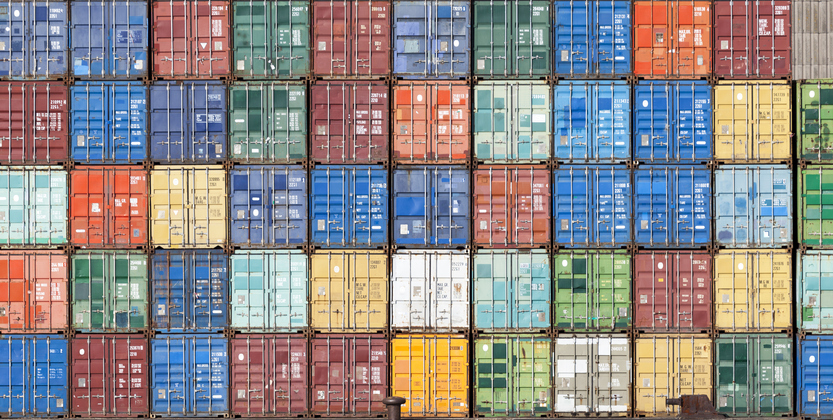
This shipment involved 30 temperature-controlled containers of mRDTs transported from India to Indonesia as a single consolidated delivery—equivalent to approximately 4.235.975 individual tests, representing a total shipment value of $ 1,863,829. At this scale, success depends not only on the products themselves, but on synchronized planning across sourcing, documentation, transport, and regulatory processes.
From the outset, PFSCM and partners anticipated extended approval timelines and built in early preparation, strict documentation management, and continuous stakeholder coordination. This proactive approach ensured that every element of the shipment moved forward together, without disruption.
Transport
From port to warehouse
The transit from India to Indonesia took approximately 15 days. Upon arrival, all 30 containers required customs clearance and inland transport within a narrow window to avoid port charges and operational delays.
Through proactive coordination and communication with all stakeholders the 30 containers cleared and delivered the full shipment to the central warehouse within six days of arrival—a strong performance across customs clearance, logistics execution, and stakeholder communication.
Agility
Solving for capacity through partnership
As shipment volumes were finalized, it became clear that the existing central warehouse could not receive all 30 containers simultaneously. The MoH acted swiftly to identify an alternative warehouse with sufficient capacity, enabling the full shipment to be received in a single, coordinated delivery.
This solution avoided staggered arrivals, minimized additional handling, and kept the delivery on schedule. It is a clear example of how responsive, trust-based partnerships can convert a logistical constraint into a well-managed pivot.
“A shipment of this scale leaves very little room for error. When it became clear that warehouse capacity would be a constraint, the MoH moved quickly and decisively — and that made all the difference. This is exactly the kind of trust-based partnership that turns a potential delay into a non-event.”
— Arnaud Becker, PFSCM Logistics Specialist
Quality
Safeguarding quality across the cold chain
As temperature-sensitive diagnostics, mRDTs require controlled conditions throughout transport and storage to maintain their accuracy and effectiveness. Exposure to extreme heat or temperature fluctuations can compromise test performance.
Throughout the delivery the appropriate temperature conditions were maintained from origin through to final delivery, safeguarding product quality and ensuring the diagnostics were ready for immediate use upon arrival.
Outcome
Turning coordination into impact
From planning in September 2025 to final delivery in February 2026, this operation demonstrated how end-to-end supply chain management can deliver a high-volume shipment:
- On time
- At full scale
- Within a six-day clearance and delivery window
- Without additional delays or port charges
For Indonesia, this delivery means health facilities can access the diagnostics they need to detect malaria earlier, treat patients faster, and respond more effectively to outbreaks.
Behind every malaria test is a supply chain. When that chain performs well, countries can convert operational complexity into a measurable public health impact.