Introduction
A joint publication of the African Society for Laboratory Medicine (ASLM), and the Partnership for Supply Chain Management (PFSCM), in partnership with the Africa CDC and informed by insights from training participants.
Across Africa, the infrastructure for genomic surveillance has been built at remarkable speed. New sequencing instruments have arrived in laboratories across the continent. Scientists have been trained, data platforms built, and networks established. According to Africa CDC, as of 2024, 53 of Africa’s 55 Member States now have in-country sequencing capacity — up from just seven before the COVID-19 pandemic. This is a remarkable achievement and a testament to what coordinated investment in public health can accomplish.
Scientific capacity is only part of the story. An Africa CDC survey found that 85 percent of countries cited inconsistent laboratory supplies — reagents, extraction kits, and consumables — as the primary barrier to building diagnostic capacity for future epidemics. ASLM‘s own field engagement across the continent has consistently surfaced the same reality: procurement disruptions, high input costs, limited local suppliers, and import delays continue to prevent laboratories from operating at full capacity. These are not marginal inefficiencies — they are structural gaps that sit at the heart of Africa’s genomic surveillance challenge.
Africa’s genomic surveillance systems have the tools. What they need now is the supply chain to match. Elevating procurement to a core strategic pillar of health security is the step that transforms impressive capacity into lasting resilience — independent of emergency funding, resistant to logistics disruption, and built to outlast the crises that made it necessary.

Convening stakeholders
Convening stakeholders to strengthen genomic surveillance supply chains
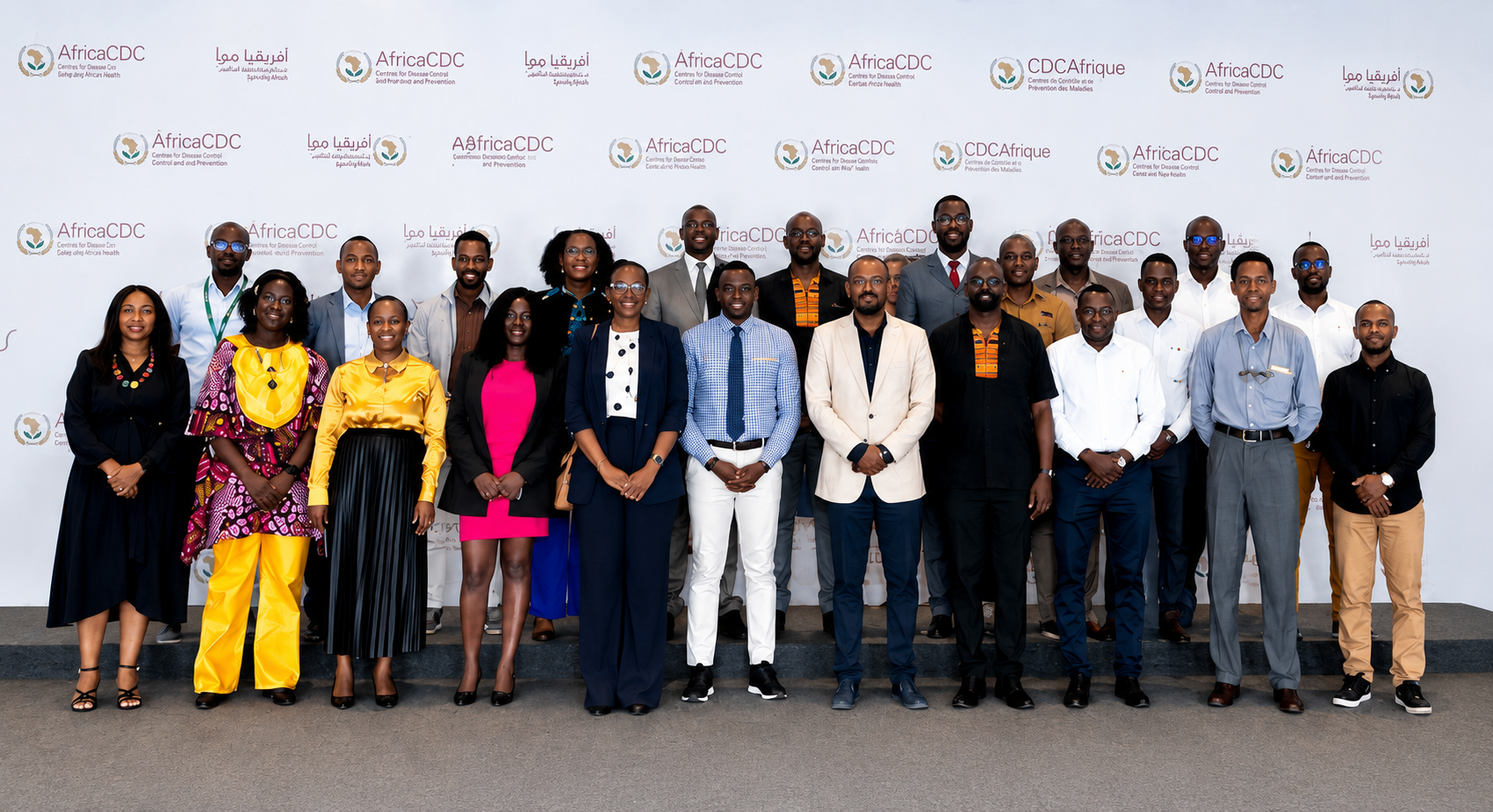
In March 2026, the Africa CDC, the African Society for Laboratory Medicine (ASLM), and the Partnership for Supply Chain Management (PFSCM) co-convened an international multi day training on strategic procurement and supply chain for genomic surveillance in Addis Ababa.
The forum brought together laboratory, regulatory, and supply chain leaders from 11 member states to examine how Africa can ensure the continuity and resilience of genomic operations through improved procurement and supply chain practices. During the multi day, participants worked through end-to-end supply chain process mapping, forecasting and demand planning, regulatory bottlenecks and trade facilitation, service level agreements and contract management, category management and supplier relationships, and the co-design of a Procurement and Supply Chain Management Community of Practice to sustain peer learning beyond the training.
Together, participants learned about critical topics spanning the full procurement and supply chain cycle for genomic surveillance. Drawing on the training agenda, sessions covered:
- Supply chain roles and responsibilities in genomic sequencing, including end-to-end process mapping
- Forecasting and quantification, procurement digitalization, and regulatory and trade facilitation
- Service level agreements, contract management, and category management for genomics
- Supplier relationship management, strategic contracting, and supplier scorecards
- Co-designing a Procurement and Supply Chain Management (PSM) Community of Practice to sustain peer learning and knowledge exchange beyond the training

SUSTAINABLE SYSTEMS
When fragmentation affects diagnostic network performance
COVID-19 catalyzed rapid genomic investments, and while these created remarkable momentum, procurement models varied widely in their structure and sustainability.
The next leap forward demands a transition toward structured, strategic, and data-driven procurement systems that are sustainable, affordable, and resilient to shocks. Strategic procurement, as discussed throughout the training, is rooted in structured market and product intelligence, using category management and digital tools to understand risks, shape markets, and create predictable, investable demand for quality genomic products.
Key priorities discussed during the training included:
-
Total life cycle costing.
Participants learned that buying a sequencer represents only a fraction of its total cost. Beyond acquisition, ongoing expenses for maintenance, reagents, training, and infrastructure represent the true investment required for sustainable genomic surveillance. -
Standardized service level agreements (SLAs).
A major priority identified was the urgent need for standardized, legally binding SLAs between laboratories, suppliers, and service providers. These agreements ensure accountability for equipment uptime, reagent delivery timelines, and technical support responsiveness. -
Aggregating demand across diseases.
Pooling procurement for multiple pathogens, from antimicrobial resistance (AMR) to malaria and COVID-19, can unlock economies of scale and strengthen market negotiating power. At the regional level, coordinated demand also sends clearer signals to manufacturers, encouraging investment in products that match African program needs. -
Streamlining regulatory pathways.
Lengthy waiver processes and incorrectly or inconsistently applied harmonized system (HS) codes continue to cause supply delays. Streamlining or removing bureaucratic, multi-layered customs processes — and aligning objectives across all relevant government departments — would significantly ease the clearance of genomic sequencing products and build trust among customs officials, regulators, and public health programs. -
Strengthening cold chain and logistics systems.
Participants highlighted a critical systemic flaw: logistics teams are routinely excluded from procurement planning and are only notified when cold chain reagents arrive at the port. Ultra-cold storage requirements and short reagent shelf lives demand meticulous coordination from order to arrival. Revenue authority bottlenecks and reliance on fragile ‘fast-track’ clearing agents frequently leave ultra-cold shipments at risk. Even minor customs delays can lead to losses of high-value reagents and missed sequencing runs. Addressing this requires bringing customs officers to the table as active public health partners—by including this group in future sessions alongside laboratory and procurement leaders. -
Digitizing procurement.
Participants emphasized that manual, paper-based systems create dangerous blind spots—particularly when logistics teams lack real-time visibility into incoming shipments. Moving beyond these limitations toward integrated digital systems gives countries real-time visibility, audit readiness, and stronger forecasting accuracy. Digital tools and platforms — including those being developed and deployed by partners across the continent — offer a practical path toward this kind of integrated visibility.
Genomics adds an extra layer of complexity to supply forecasting. Unlike routine diagnostics, genomic sequencers process patient samples in groups — a single run can test 90 or more samples together, making the cost per test reasonable. But when sample numbers are low, labs may run a partial group using the same reagents at a higher cost per test. Variable sample volumes, retesting needs, and platform-specific kits all make precise quantification challenging. As one training insight summarized: forecasting must account for the fact that labs will not always have enough samples to fill a complete run. Without robust forecasting models, sequencing continuity suffers. Participants reflected on how forecasting gaps can lead to reagent shortages, testing interruptions, or lost data at critical moments. Addressing forecasting gaps requires closer collaboration between laboratory teams, program managers, and procurement partners — with shared data systems that give all parties visibility into stock levels, consumption patterns, and upcoming needs.
Solvable challenges
Persistent barriers, solvable challenges
Building on Africa’s extraordinary expansion — from 7 to 53 Member States with sequencing capacity — the focus now turns to removing the remaining barriers that limit full-scale utilisation: limited funding cycles, high equipment and maintenance costs, delayed import waivers, complex customs processes, and shortages of trained bioinformaticians, laboratory scientists, and supply chain professionals with genomics-specific expertise. These barriers often manifest as recurring stockouts, underutilized platforms, or fragmented data flows between laboratories and decision makers.
Through coordinated action and better systems design, these obstacles can be turned into opportunities for innovation. Targeted changes in complex health supply chains, such as clarifying roles, improving data flows, and aligning procurement timelines with budget cycles, can unlock significant efficiencies without compromising quality or equity.
Opportunities for transformation
The training highlighted tangible pathways for change that align strongly with ongoing regional and partner efforts:
-
Investing in regional manufacturing.
Regionalization of reagent production and packaging can shorten delivery timelines, reduce freight costs, and mitigate cold chain risks, while stimulating local industrial development. -
Leveraging existing surveillance infrastructure.
Established HIV, TB, and malaria programs often already have robust logistics systems, cold chains, and data platforms. Genomic surveillance can build on these assets rather than creating parallel systems, thereby improving value for money and sustainability, where programme variables and technical requirements align. -
Developing national reform roadmaps.
Roadmaps must start with strategic policy inclusion. Several participating countries noted that while their clinical Essential Diagnostics Lists (EDLs) are finalized, genomic surveillance is absent. This highlighted the need for countries to integrate genomic capabilities into their National Laboratory Strategic Plans (NLSPs) as a Tier 4 (National Reference) requirement. By aligning with the Africa Pathogen Genomics Initiative (PGI) and global Pandemic Preparedness (PPR) standards, ministries of finance can establish permanent budget lines for genomic sovereignty, transitioning supply chains away from reactive, donor-dependent cycles. Cross-ministerial coordination is key to addressing customs processes, tax exemptions, HS code classification, and regulatory approvals in a coordinated way. Working through regional platforms, these opportunities can be converted into practical, country-owned plans that link policy reform, laboratory networks, and supply chain strengthening.
Why it matters
Procurement and supply chains as a strategic public health function
As the training made clear, sustainable genomic surveillance depends on three pillars working together: laboratory science and workforce capacity, policy frameworks and continental coordination, and procurement and supply chain systems — all areas in which Africa CDC, ASLM, and PFSCM collectively bring expertise and shared commitment.
No single partner can deliver this alone. Positioning supply chain professionals, laboratory scientists, and policy leaders as equal contributors to public health innovation is the shift that turns impressive capacity into lasting resilience.
For the partners behind this training, this means working together across laboratory science, policy, and operations — ensuring that supply chain strengthening is coordinated, country-owned, and built to last.

A call to action
Building Africa's next-generation supply chains
The Addis Ababa convening did more than exchange technical know-how; it charted a vision for Africa’s next decade of genomic readiness. To ensure sustainable progress, countries must:
- Adopt an inter-ministerial approach to capacity building. Supply chain resilience requires a tripartite model in which lab directors, procurement officers, and Ministry of Finance and customs officials align to clear logistical bottlenecks.
- Integrate genomic surveillance into National Laboratory Strategic Plans and health security frameworks to establish robust co-financing models, complementing critical donor investments with sustainable domestic budget lines.
- Invest in laboratory workforce capacity and scientific leadership to sustain sequencing operations at the national and regional level.
- Invest in supply chain leadership and technical capacity.
- Harmonize regulatory frameworks and import procedures.
- Digitize procurement and inventory systems to improve visibility and accountability.
- Strengthen forecasting practices and coordinated demand planning across programs and partners.
As these priorities move from discussion to implementation, Africa CDC, ASLM, and PFSCM are committed to supporting governments and regional institutions to translate these concepts into operational models.
Final Thoughts
The conversations that began in Addis Ababa mark a turning point
Africa has both the expertise and ambition to lead globally in innovative, resilient genomic surveillance. The key is to equip laboratories and health systems with agile, data-driven supply chains that can keep pace with scientific breakthroughs and evolving threats.
The conversations that began in Addis Ababa mark a turning point — one where laboratory science, continental policy, and supply chain management are recognized as equally essential pillars of Africa’s health security future. No single discipline is sufficient. The continent’s genomic readiness depends on all three advancing together.
Africa CDC, ASLM, and PFSCM remain committed — together — to translating policy leadership, laboratory expertise, and supply chain innovation into sustained genomic readiness across Africa.