





Who we are
PFSCM ensures lifesaving commodities are accessible and available to communities in hard-to-reach places. We help donors, governments, non-profit organizations, and humanitarian agencies achieve their public health goals through cost-saving procurement, efficient logistics, pharmaceutical-grade storage, and real-time shipment tracking. PFSCM demonstrates its commitment to customer satisfaction and service excellence through our ISO 9001:2015 certified Quality Management System, which underpins all of our processes, systems, and services.
PFSCM’s impact since 2012:
BILLION US$ in health and COVID-19 products PROCURED
shipments DELIVERED, among which hundreds of cold chain products
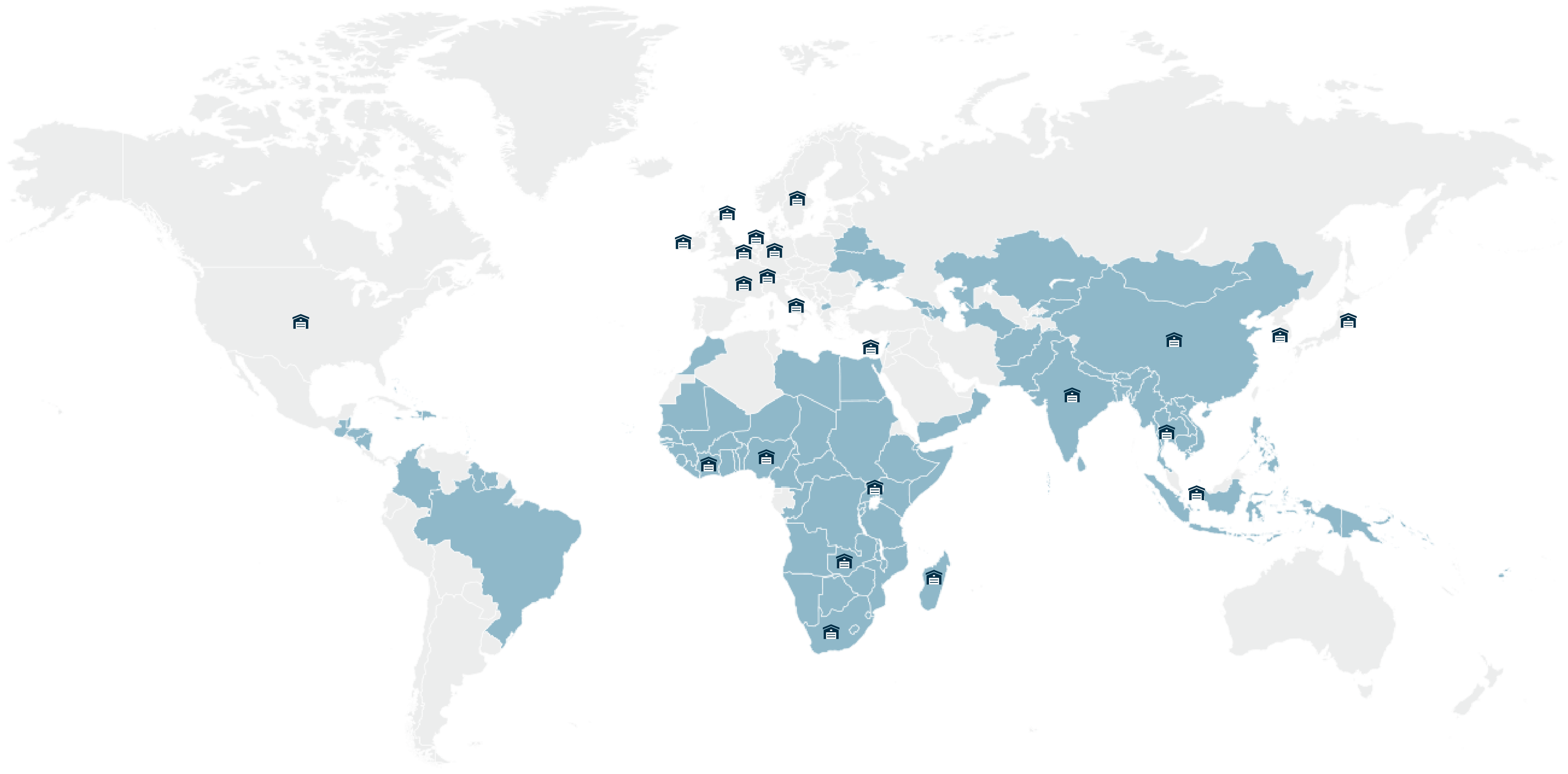
low- and middle-income countries SERVED around the world
Latest News

Supporting Nigeria with the rollout of more than 120 analyzers for TB detection
In 2023, the Partnership for Supply Chain Management (PFSCM) worked closely with stakeholders in Nigeria to execute the rollout of more than 120 analyzers used for the loop-mediated isothermal amplification or LAMP method of Mycobacterium Tuberculosis (TB) detection. ...

Helping Pakistan strengthen its TB program through the procurement and delivery of medical imaging equipment
The Partnership for Supply Chain Management (PFSCM) has supported Pakistan with commodity and project-based procurement for several years. However, 2023 was a milestone year, with more than 80 medical imaging machines commissioned by two recipients in the country. The...

Strengthening medical imaging in Mozambique through the rollout of new CT scanners at multiple hospitals
Since 2022, PFSCM has been assisting the Ministry of Health of Mozambique (MoH) with the rollout of computed tomography (CT) equipment to strengthen medical imaging services in the country. According to the WHO, in 2020, there were 1.6 CT scanners per 10,000 cancer...
What we do

Source
- Best quality and value products
- Pooled procurement opportunities
- International best practices
- Navigate regulatory environment
Move
- On-time and in-full deliveries
- Cost-effective transport
- Custom and waiver clearance
- Safe, reliable shipments

Track
- Tailored, real-time information
- End-to-end visibility and tracking
- Data-driven decisions
- Improved chain of custody
Recent vacancy
Procurement & Client Services Manager
Provide effective and efficient operational principal recipient (PR) services, procurement, order fulfillment, and customer service solutions specific to procurement and order fulfillment requirements of our clients and their principal recipients.
PFSCM serves clients, governments and Principal Recipients in over 90 countries, and we have access to over 250 reputable suppliers around the world.
Sign up to receive public health supply chain news from PFSCM

All content ©2024 Partnership for Supply Chain Management, Inc. All rights reserved.