Introduction
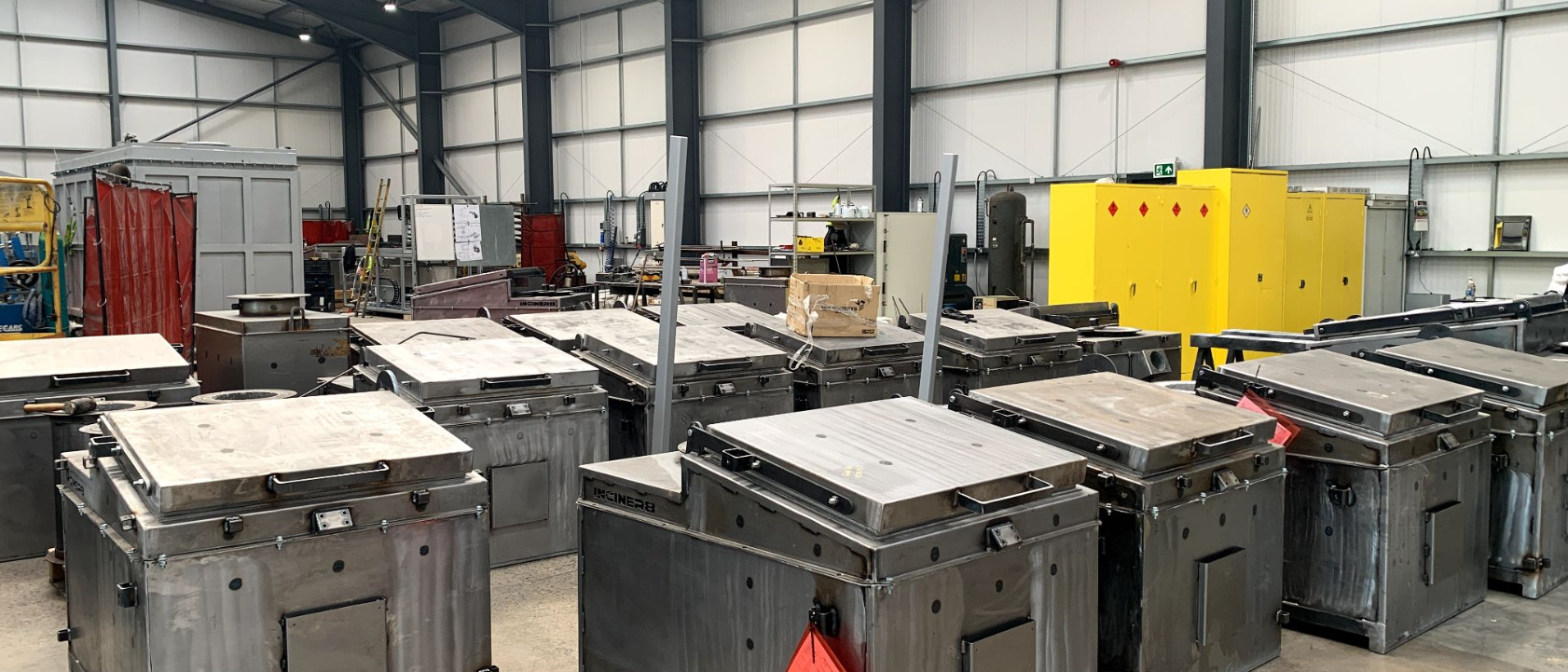
From November 2025 through March 2026, the Partnership for Supply Chain Management (PFSCM) coordinated the end-to-end delivery of healthcare waste treatment systems to 20 health facilities across Zambia, helping strengthen the country’s healthcare waste management capacity through the successful deployment of 20 medical waste incinerators.


To support the rollout, PFSCM managed the end-to-end coordination of 20 Inciner8 i8-M40 medical waste incinerators valued at more than $640,000.
The project involved coordinating ocean freight, in-country warehousing, rural transportation routes, installation schedules, engineers, customs oversight, and stakeholder coordination across geographically dispersed healthcare facilities throughout the country.
incinerators delivered across Zambia
consolidated ocean containers
estimated transport cost saving
The systems were shipped in five 40-foot high cube ocean containers from London Gateway in the United Kingdom to the Port of Dar es Salaam in Tanzania before being transported by road into Zambia. Rather than shipping each of the 20 incinerators individually, PFSCM consolidated the systems into five ocean containers, generating an estimated transport cost saving of about $300,000 while simplifying shipment coordination. Once in-country, the equipment was stored at a third-party logistics provider’s warehouse, where the consolidated shipments enabled final distribution and installation activities to be coordinated across all 20 sites. This approach reduced the complexity of managing multiple container arrivals at different times, allowing transportation, warehousing, and installation schedules to be synchronized more efficiently across the country.

Our role
End-to-end procurement and coordination
PFSCM’s role included sourcing, supplier contracting and management, procurement, transport planning, upstream and downstream oversight, regulatory and import supervision, and in-country client coordination.
Waste management systems are among the most complex procurement categories in PFSCM’s portfolio, requiring coordination across logistics, site readiness, installation, commissioning, and long-term operational planning. These turnkey projects often require close alignment between suppliers, engineers, logistics providers, healthcare facilities, and in-country stakeholders to help ensure systems are delivered and operationalized successfully.
The deployment reached healthcare facilities located across multiple regions of Zambia, including rural and geographically dispersed sites where logistics coordination and delivery planning required careful synchronization between transportation and installation activities.
One of the project’s key operational challenges involved coordinating exact delivery schedules with the arrival of installation engineers at each facility across 20 separate deployments. Close synchronization between transport movements and installation activities helped reduce delays, minimize material handling equipment costs, and support efficient execution across all deployment locations.
Additional risk mitigation measures were also implemented during the project. Warranty terms were negotiated to begin at the point of installation rather than upon arrival at port, preserving about six months of warranty coverage for the Zambia deployment.
The i8-M40 systems were selected for their suitability for smaller healthcare facilities and low-volume waste environments. The compact systems include integrated afterburners designed to help reduce harmful emissions while supporting safer treatment of healthcare waste.
In their words
From PFSCM's project team
”PFSCM’s project-based procurement approach focuses not only on delivering equipment, but also on helping ensure systems are operational, sustainable, and aligned with national health priorities. This includes coordinating installation planning, logistics sequencing, storage requirements, and broader implementation considerations across the project lifecycle.”
Nick Berndt, PPM Procurement Projects Manager
“As countries continue strengthening healthcare systems, scalable and operationally sustainable healthcare waste treatment capacity remains an important component of supporting safer healthcare environments, infection prevention efforts, environmental health, and long-term health system resilience.”
Nick Berndt, PPM Procurement Projects Manager
Work with us
Advancing safer healthcare waste management
Learn more about PFSCM’s procurement and logistics services for healthcare waste management.