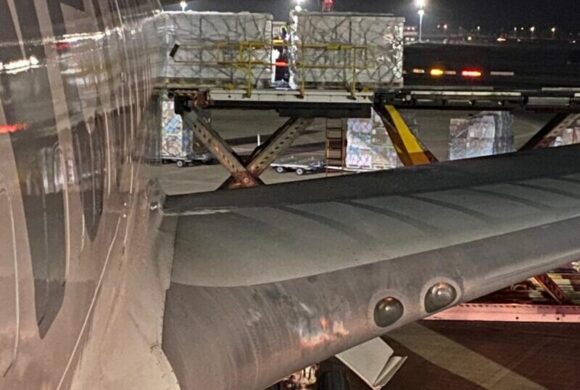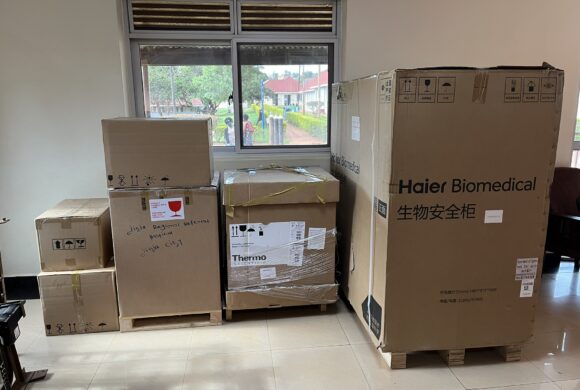
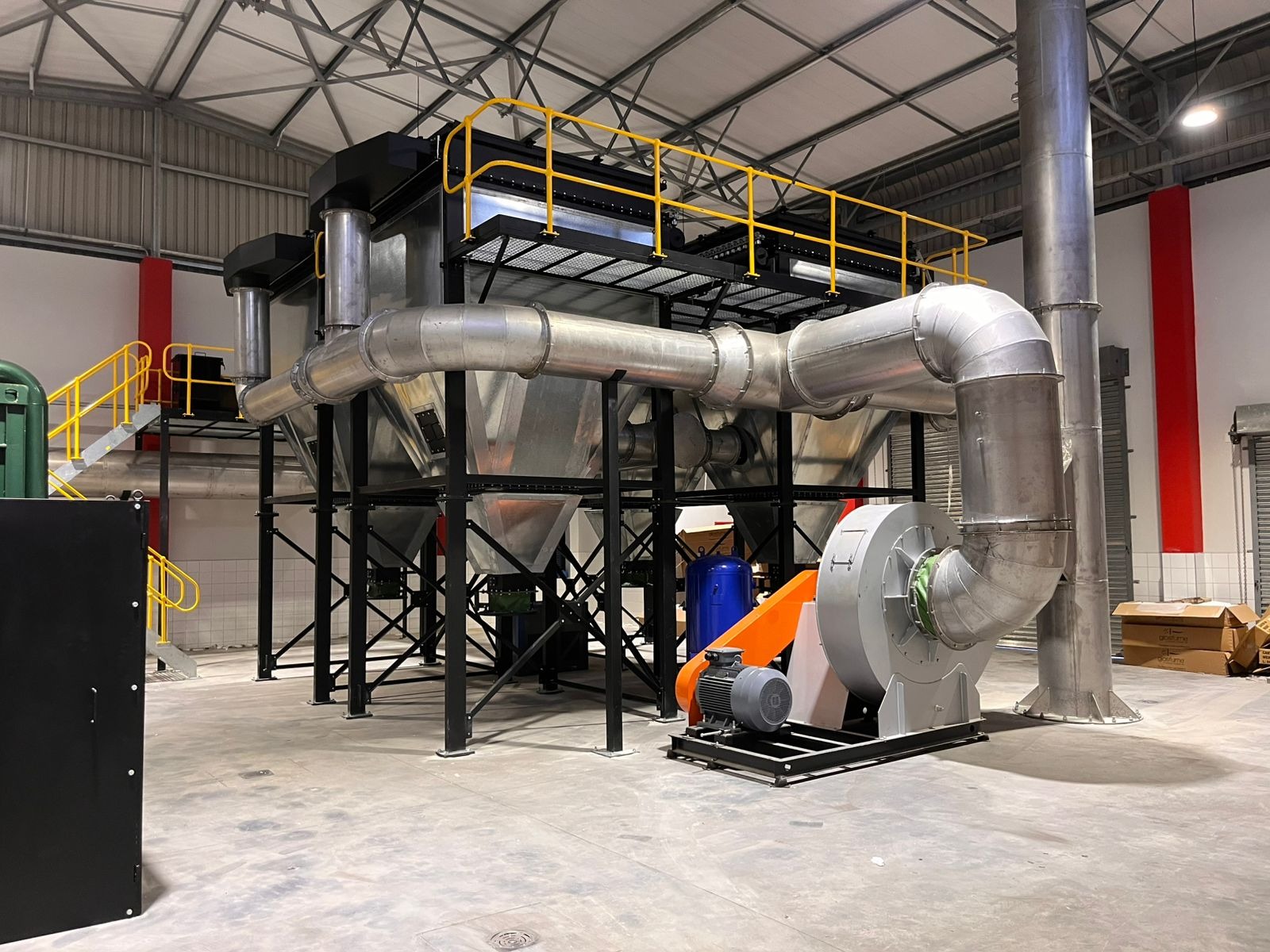
Since 2021, the Partnership for Supply Chain Management (PFSCM) has partnered with SaubaTech, a South Africa-based manufacturer of advanced incineration and emissions control systems, to deliver high-capacity waste management installations across Cameroon, the Central African Republic, eSwatini, Liberia, Niger, and Togo.
In 2025, years of production, planning, and implementation coordination resulted in the delivery of five large V500 systems in Cameroon and three in Niger, with Liberia and eSwatini each receiving one V500 system. These high-capacity systems, capable of processing 360 kg of medical waste per hour, are equipped with wet scrubbers to help reduce air pollution. eSwatini was the only country to receive a dry filtration configuration.
The Central African Republic and Togo received a medium V220 system, and Liberia received two smaller V70 incinerators.
The collaboration formed part of a broader effort to strengthen environmentally responsible healthcare waste disposal in low- and middle-income countries.
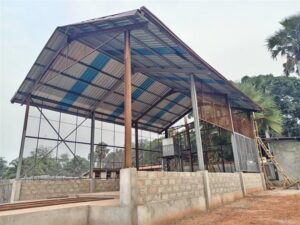
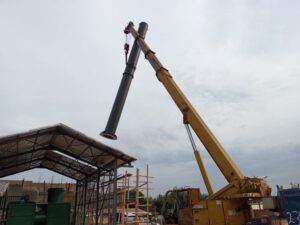
PFSCM Procurement Projects Manager Nick Berndt explains that these initiatives required an integrated supply chain solution to manage the full sourcing and procurement lifecycle from needs assessments and market analysis to supplier vetting, quality assurance, competitive tendering, and coordination of equipment readiness and shipment.
“By orchestrating collaboration among donors, suppliers, engineering partners, logistics providers, and ministries of health, we ensure that waste management technologies are appropriately specified, procured, delivered, and ready for installation and operation while meeting national requirements and international standards.”
He adds that, beyond sourcing and procurement, the shipment and installation phases were equally complex and extensive to manage.
“The larger V500 configurations, particularly those equipped with wet scrubbers, resemble compact waste treatment plants, integrating primary combustion chambers with advanced emissions control technology designed to reduce particulate matter and harmful gases.”
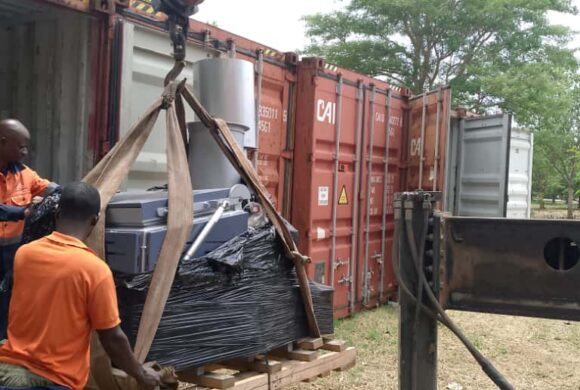
He notes that the scale of the deliveries was significant, with five systems for Cameroon alone amounting to about 45 containers of equipment.
Further, SaubaTech undertook the manufacturing, factory acceptance testing, shipment preparation in collaboration with a PFSCM partner 3PL, and site engagement. Supplier-led site visits were incorporated into project planning to review civil works designs, assess infrastructure compatibility, and provide technical feedback before installation.
“Early supplier engagement was critical,” stressed Berndt. “Having technical teams review site plans and participate in readiness discussions reduced long-term risk and improved alignment with installation requirements.”
In addition, recognizing the high likelihood that site construction timelines would extend beyond delivery schedules, PFSCM negotiated practical warranty frameworks tied to installation dates and arranged secure in-country storage solutions where necessary.
“Budget planning accounted for crane offloading, warehousing, insurance, and secondary transport to sites once civil works are completed.”
The result is a coordinated rollout that integrates procurement, logistics, environmental compliance, and long-term operational planning, concludes Berndt.
Meanwhile, installations are underway, with commissioning and operator training expected to continue through early 2026.
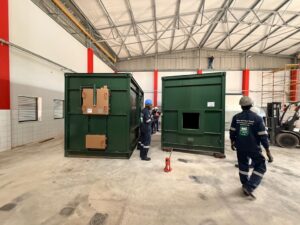
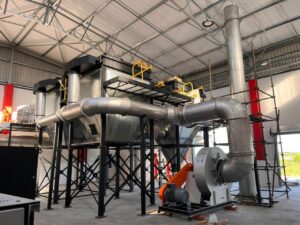
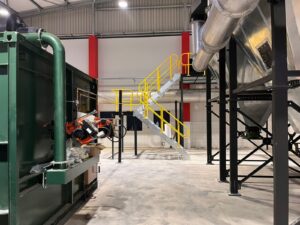
For eSwatini, PFSCM partnered with Logenix International to deliver a complete high-capacity SaubaTech medical-waste incinerator from South Africa to Manzini, marking a significant milestone in strengthening the country’s environmentally responsible healthcare waste treatment capacity.
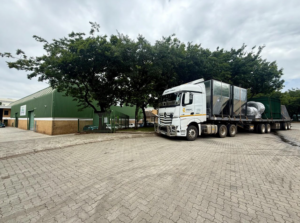
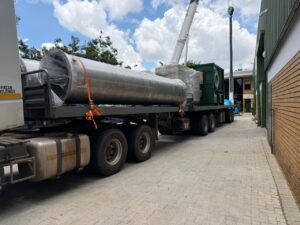
Valued at more than $1 million, the shipment required careful orchestration due to the scale and configuration of the equipment, including six 40-foot containers and three break-bulk truckloads transported under a single invoice.
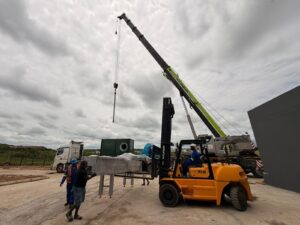
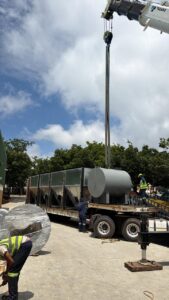
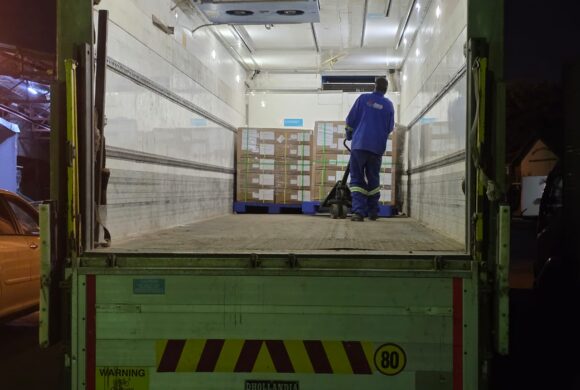
To address manufacturer storage limitations, Logenix secured a dedicated, fully monitored warehouse facility in South Africa, where oversized components were offloaded using specialized cranes and rigging teams, cataloged, and staged for export. SGS inspections and compliance approvals were coordinated in advance, and—given the single-invoice structure—all nine trucks were required to cross the border simultaneously. This complex convoy movement was successfully executed during the rainy season, with close coordination between customs authorities and logistics partners on both sides of the border.
Upon arrival in Manzini, crane capacity was pre-positioned to enable immediate offloading and handover to installation teams. Through integrated planning, third-party logistics coordination, secure storage arrangements, and synchronized cross-border transport, the eSwatini delivery demonstrates how proactive supply chain management can accelerate deployment timelines even in challenging operating environments.